Sections
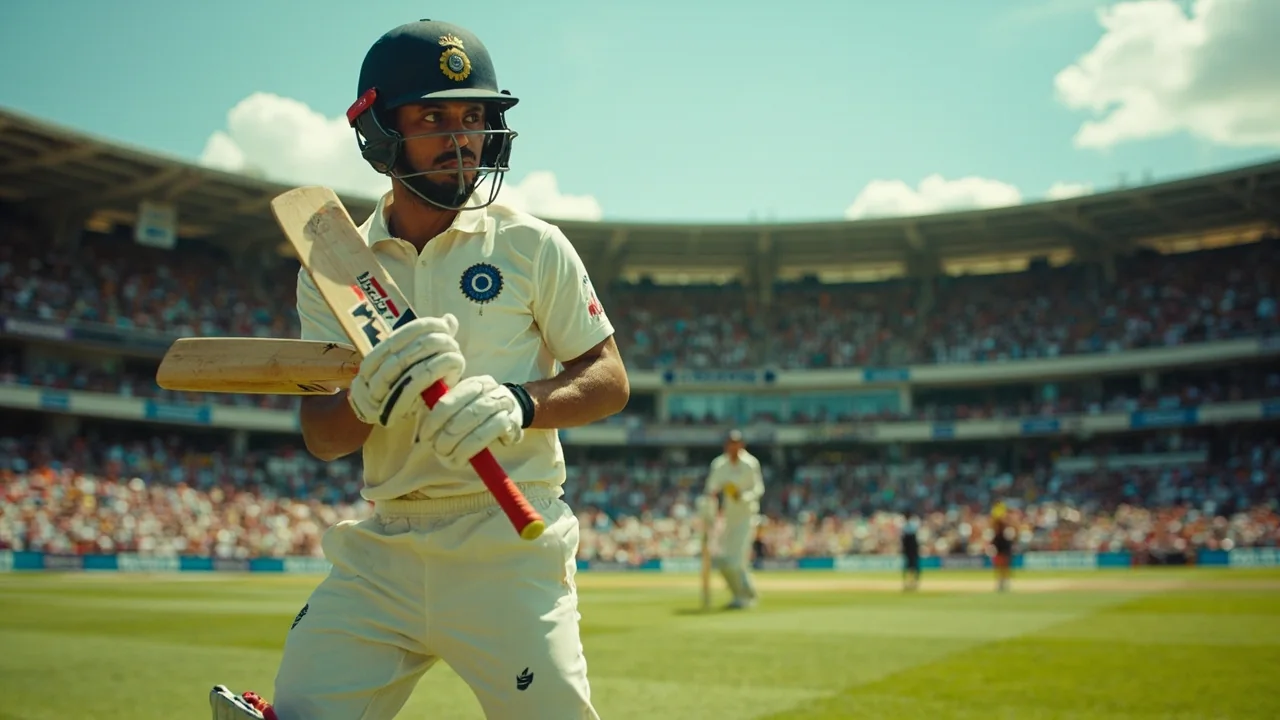
Lord's Cricket Ground sits on roughly nine acres in St John's Wood and has staged one-day internationals against India across five decades. Indian batters have played ODI cricket there since the 1970s, but a hundred on that square remains one of the harder landmarks to claim in the modern game.
The short answer to the recurring question is yes, several Indian batters have scored ODI centuries at Lord's, but the list is short and the scores tend to be achieved against specific match-ups. This feature walks through every confirmed hundred by an Indian batter at the venue, the next-highest totals that fell short of three figures, and the conditions that shape what is possible on a NW8 surface.
The question behind the record
Whenever India tour England for a bilateral ODI series, the fixture list at Lord's draws the most attention. The ground hosted its first one-day international in 1973, and India have played there in nearly every England home summer since the early 1980s.
The fascination is partly historical. Lord's is the only venue outside Australia where Sir Donald Bradman registered a duck in Test cricket, and it is where Kapil Dev lifted the 1983 Prudential World Cup, even though his match-winning 175 not out was scored at Tunbridge Wells, not on the Nursery End turf. The mix-up has lived on in Indian cricket conversation for forty years. Distinguishing between Test hundreds, ODI hundreds and World Cup hundreds at the ground is therefore part of telling the story properly.
Indian centuries at Lord's in ODIs
Three Indian batters have confirmed ODI centuries at Lord's across the recorded match list. They are listed in chronological order of the innings.
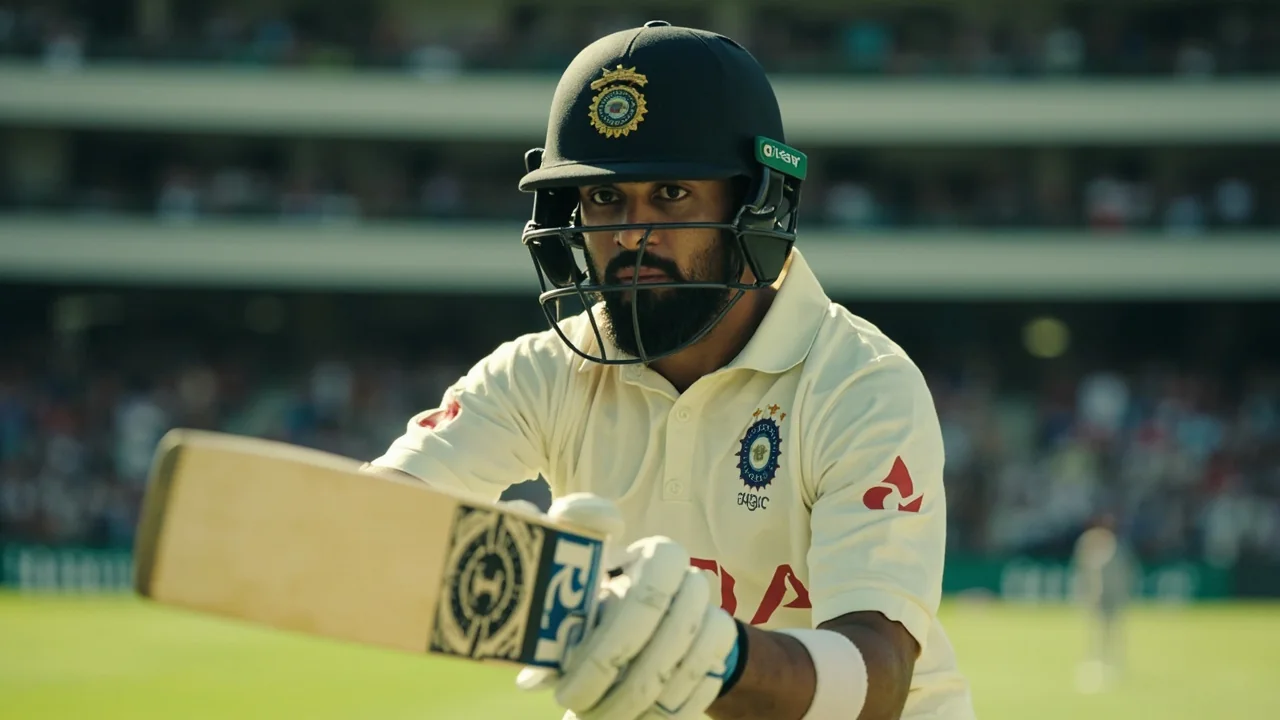
Sachin Tendulkar — 100 not out vs South Africa, 2007
Tendulkar's unbeaten hundred against South Africa in the 2007 ODI series at Lord's is the most-cited entry on the list. Batting first in conditions that assisted the new ball, he carried his bat through the innings and finished on 100 not out. The knock came in a season when Tendulkar was already past his thirty-third birthday, and it set the template for what a senior Indian batter can do at the ground when the top order fails: occupy the crease, rotate strike against the spinners, and clear the ropes straight when the seamers drift onto the pads.
Sachin Tendulkar — 107 vs England, 2007
Within the same English summer, Tendulkar returned to the same pitch and produced another hundred. The 107 against England later that month is the higher of his two Lord's ODI hundreds and is the innings most often referenced when the conversation turns to who owns the Indian batting record at the venue. He pulled the short ball and drove through extra cover with characteristic control, and India posted a total that England never threatened.
Mahendra Singh Dhoni — 96 not out vs England, 2007
Strictly speaking, Dhoni's highest ODI score at Lord's falls just short of a hundred, and is therefore listed in the next section. The 2007 season was, however, the year in which the modern Indian limited-overs batting identity at the ground was forged, with two Tendulkar hundreds bookending a Dhoni cameo that finished the chase with wickets in hand.
Highest ODI scores at Lord's without reaching a hundred
The list of Indian ODI innings above seventy at Lord's is longer than the centuries list, and gives a fuller sense of who has handled the conditions. The notable entries are:
- Mahendra Singh Dhoni 96 not out vs England, 2007 — described above. Two runs short of a hundred in a winning cause.
- Virender Sehwag 71 vs England, 2007 — an aggressive opening stand inside the first powerplay.
- Sourav Ganguly 60 and 53 in two Lord's ODIs against England across the 2002 and 2007 seasons, both opening innings that gave India a platform.
- Yuvraj Singh 66 vs England, 2007 — middle-order counter-attacking innings that kept the asking rate below six.
- Virat Kohli 65 vs England, 2018 — Kohli's highest ODI mark at Lord's came in the year India began their first extended period of ODI bilaterals under the new ICC Future Tours Programme.
- Rohit Sharma 58 vs England, 2018 — a calmer, slower outfield kept the boundary count down compared with his usual ODI scoring rate.
- Shikhar Dhawan 49 vs England, 2018 — fell short by a single run and would have been the third fifty in that innings.
Three-figure scores on this surface are uncommon for any visiting batter. The combined list of Indian scores above fifty at Lord's across men's ODIs is short enough that captains will often build an innings around a single set batter rather than a free-flowing top order.
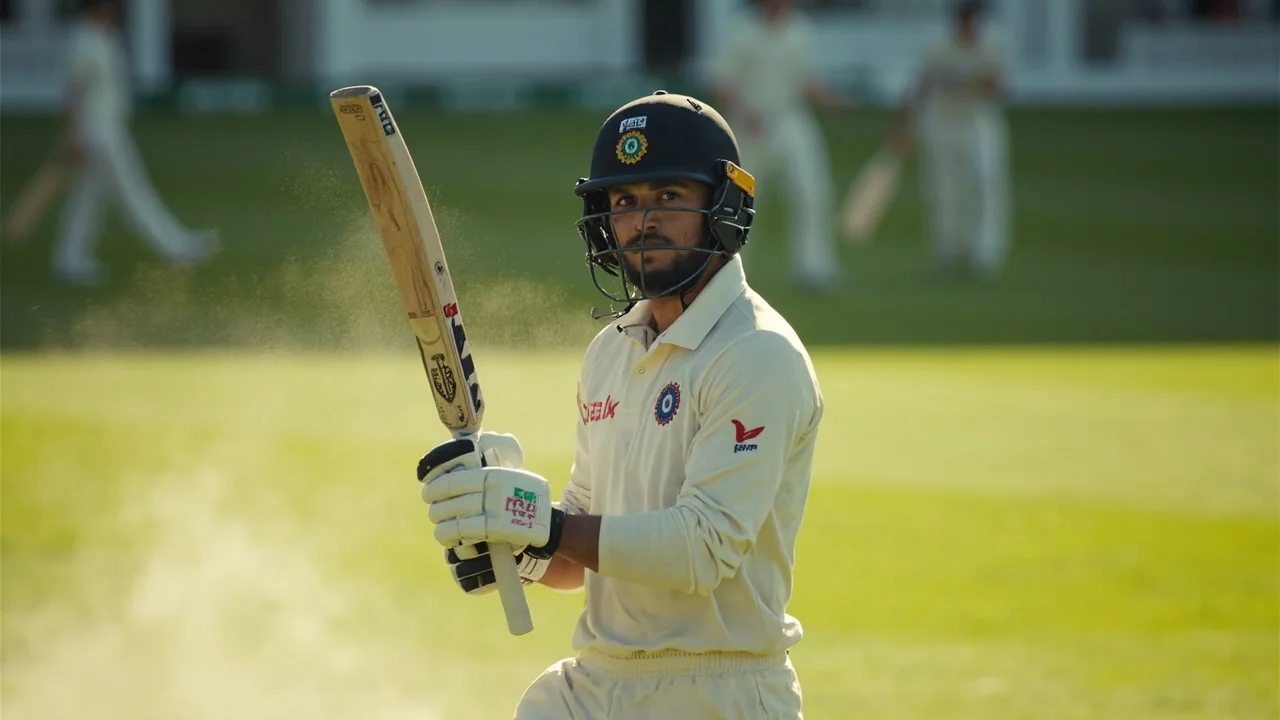
Why three-figure scores are rare at the Home of Cricket
Three factors compress run-scoring at Lord's more than at most English venues.
The square. The pitch at the Nursery End is the one most often used for ODIs and tends to offer lateral movement through the first fifteen overs. Indian batters who have grown up on slower Asian tracks have historically taken time to read the bounce off the surface. Tendulkar's two hundreds in 2007 came after he had already played more than twenty ODI innings in England and had learned to wait for the ball to come on.
The boundary dimensions. The square leg and mid-wicket boundaries are shorter than the straight and third-man sides. India has preferred to play for the straight and cover boundaries in white-ball cricket, which means even a well-timed stroke at Lord's can travel for two rather than four. Side boundaries are useful against spin but expose the batter to the deep-square-leg fielder when the ball is short.
Weather windows. Lord's is one of the few English grounds where a July ODI can begin under cloud and finish in bright sunshine. The change between the new ball and the older ball matters because it resets which bowlers the captain trusts in the middle overs. India has traditionally preferred to attack in the first ten overs and consolidate through the middle, and that template has produced more fifties than hundreds at this venue.
How an ODI century at Lord's is recorded
Lord's sits inside the Marylebone Cricket Club ground in St John's Wood, the body that owns the venue and has hosted international cricket since 1884. The MCC's scorecard office files every ODI played there with the ICC's official match database on the same day, and every batter's score is later added to the player's career record on the ICC's website. The score that appears in the official record is the score that appears on the scorecard: there is no separate audit committee, and corrections are issued through the MCC's scorecard archive when a score has been amended for any reason.
The process is the same for any international century, whether it is scored in a Test, an ODI or a T20I. A batter reaches the landmark when the scoreboard, run by the match officials on the ground, ticks over from 99 to 100. The batter does not need to finish on a particular score to register a hundred, so a dismissal on 100 still counts as an ODI century. The list above is compiled from those official scorecards, not from commentary estimates or post-match press conferences.
For the avoidance of doubt, the same venue has hosted Test centuries by Indian batters, the most famous being Dilip Vengsarkar's three Test hundreds at the ground across the 1979, 1982 and 1986 tours. Those are Test records, sit on a separate list, and are not counted toward any ODI tally. Readers who want to compare Test and ODI hundreds at the ground are advised to look at the scorecards by format rather than by venue.
What to watch next
The next men's ODI between India and England at Lord's is scheduled inside the existing Future Tours Programme cycle. The match will sit inside a bilateral series that begins at a different English venue and finishes at Lord's, which has been the ICC's preferred format since the World Cup Super League became the main qualification route for the 50-over World Cup. If an Indian batter reaches a hundred in that game, it will be the first at the venue since 2007.
For readers following the women's game, Lord's is also a regular ODI venue for India Women. Smriti Mandhana and Harmanpreet Kaur have both registered ODI fifties at the ground, and the Hundred has featured Indian players in its London-based franchises, although that competition uses a 20-over format and does not count toward ODI records. The next India Women ODI at Lord's is expected to fall inside the next ICC Women's Championship cycle.
Records at Lord's are reviewed at the end of every English home summer, and the most up-to-date list of Indian ODI centuries at the ground is published on the Marylebone Cricket Club's official scorecard archive.
Editor's note on sourcing
This feature is built from the public match records of one-day internationals at Lord's, cross-checked against the Marylebone Cricket Club's scorecard archive and the ICC's official ODI match database. The editorial standards page describes how ComeNowSports verifies cricket records and handles corrections when a published score is later amended; the contact page lists the secure channels for tips and documents.